
Water Impacts
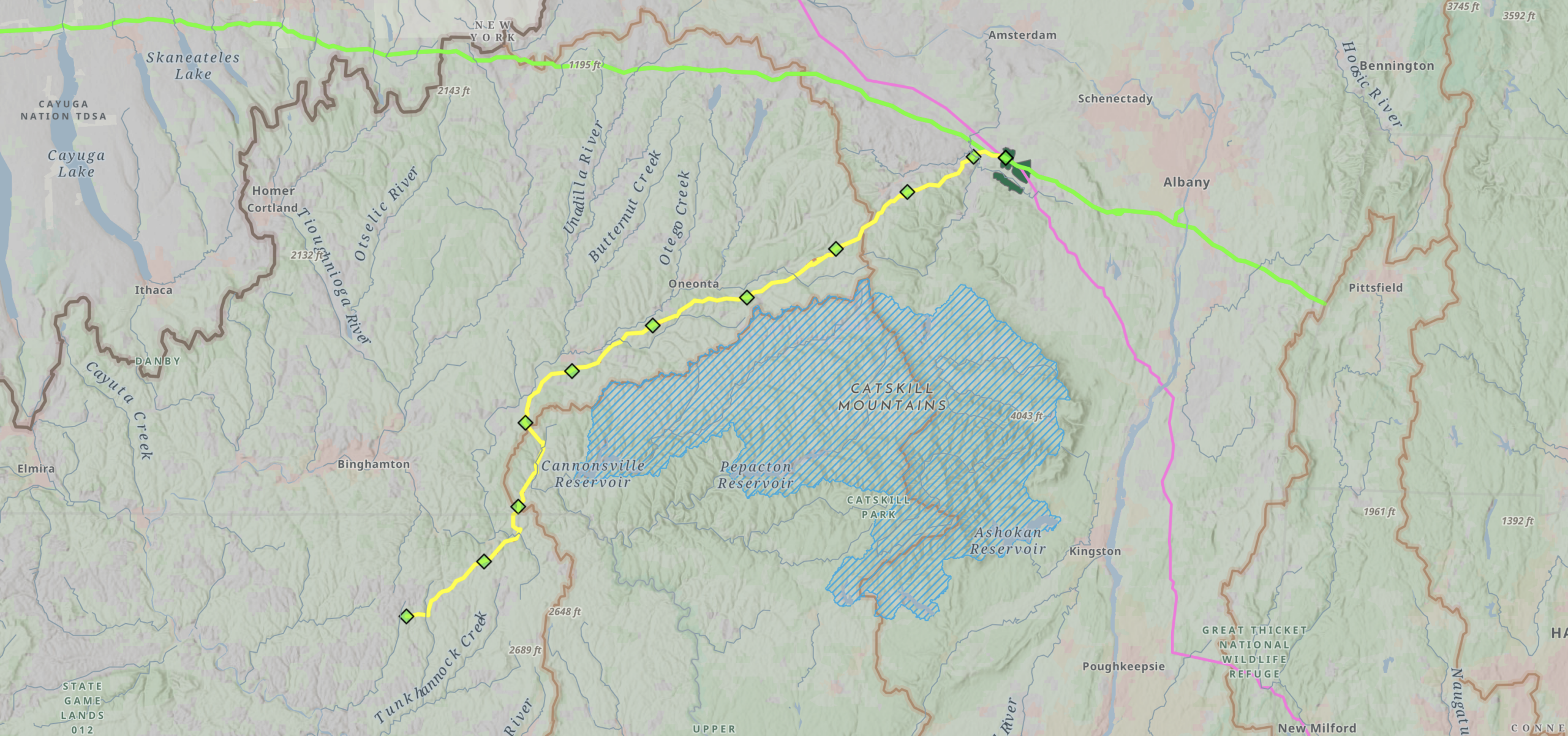
This isn't a vague concern, it's in Constitution's own federal filings. According to the FERC record, the pipeline's route crosses 330 waterbodies across Pennsylvania and New York combined, along with hundreds of acres of forest and wetlands. That's not a handful of culverts, it's hundreds of individual crossings, each one a point of construction disturbance and long-term risk.
And most of the gas this pipeline would carry isn't even staying in New York. Constitution's own project description positions it as a link in the chain to move gas onward into New England markets. Pennsylvania and New York communities take on the waterbody crossings and the construction impact, while the gas itself continues past us.
Air Impacts
This pipeline ends at the Wright Compressor Station in Schoharie County, exactly the kind of facility peer-reviewed research has linked to elevated air pollution. Compressor stations emit volatile organic compounds, nitrogen oxides, and particulate matter continuously during normal operation, when gas is combusted to power the facility. Much larger releases during scheduled "blowdowns," when large volumes of high-pressure gas and toxic compounds are vented straight into the air. A 2020 peer-reviewed study found that VOC emissions from compressor stations were associated with significantly higher county-level mortality rates. Homes near compressor stations have measured VOC levels that exceed federal air quality standards, and the pollution plume can extend miles downwind depending on weather and terrain.
The Wright Compressor Station would need to be expanded significantly, to 2.5 times its current capacity, if the Constitution Pipeline was built, which would increase air pollution emissions from this facility. Other sources of air pollution from pipelines include leaks, which can happen at any point along a pipeline where there are small gaps in equipment, and emissions at valve stations. There would be 11 valve stations located along the length of the Constitution Pipeline.
Health Impacts
Peer-reviewed research links shale gas development to a range of health concerns, including:
- Respiratory and asthma-related hospitalizations, especially in children
- Cardiovascular concerns, such as high blood pressure or heart failure
- Increased risk of certain cancers among nearby residents
- Endocrine disruption from chemical exposure
- Mental health impacts and brain development in children
- Risks to infant and maternal health
- Reproductive and fertility impacts
- Headaches, fatigue, and migraines
- Skin rashes and hair loss
(Sources: Environmental Health Perspectives, NIEHS, Moms Clean Air Force — full citations in Resources)